
Reference:
5300000000025
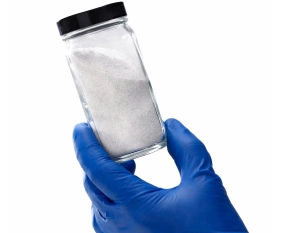
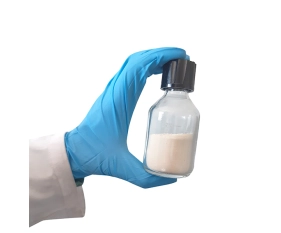
Chemical reagent used in ISCO processes and aerobic bioremediation in soils and groundwater that uses sodium persulfate and calcium peroxide as active components. The oxidant mixture enables short-term in situ chemical oxidation (ISCO) and provides electron acceptors for long-term biological oxidation.
Do you have any doubts? Contact us and we'll help you.
Ask for informationRecent applications of in situ chemical oxidation (ISCO) have shown this remedial strategy to be cost effective for recalcitrant organic contaminants in groundwater and soils. The application of sodium persulfate and calcium peroxide has a double action mechanism, being used as an ISCO reagent and oxygen supply in aerobic bioremediation processes. The mixture of sodium persulfate and calcium peroxide provides one of the strongest chemical oxidants for ISCO in the short term, and also provides electron acceptors (oxygen and sulphate) for long-term biological oxidation. The advantages of combining these reagents include: Supports chemical oxidation and bioremediation processes. Works on a wide range of contaminants. Oxygen content around 46% by weight. Typically, 40% by weight solubility for persulfate.
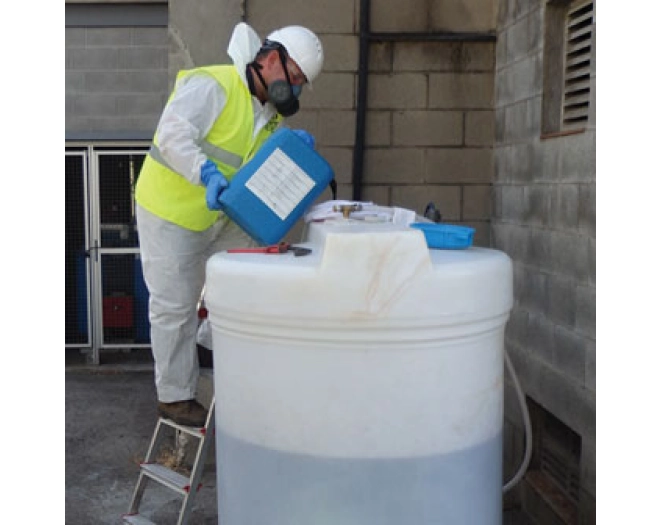
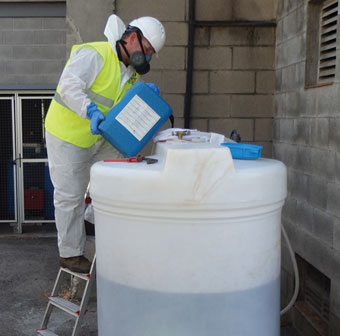
19 L drum. Warnings and recommendations on prevention and safety Like any strong oxidant, liquid sodium permanganate must be handled with care. Protective equipment during handling should include face shields and / or goggles, rubber or plastic gloves, and rubber or plastic apron. If clothes look stained, wash immediately; spontaneous ignition can occur with cloth or paper. In cases of significant exposure, use the appropriate NIOSH-MSHA dust or mist respirator. For more details do not hesitate to consult our SDS. Storage Avoid contact with acids, peroxides, and all combustible or easily oxidizable organic materials, including inorganic oxidizable materials and metal powders. With hydrochloric acid, chlorine gas is released. Liquid sodium permanganate is not combustible but will support combustion. It can decompose if exposed to intense heat. Fires can be controlled and extinguished by using large amounts of water. For more details do not hesitate to consult our SDS.
-
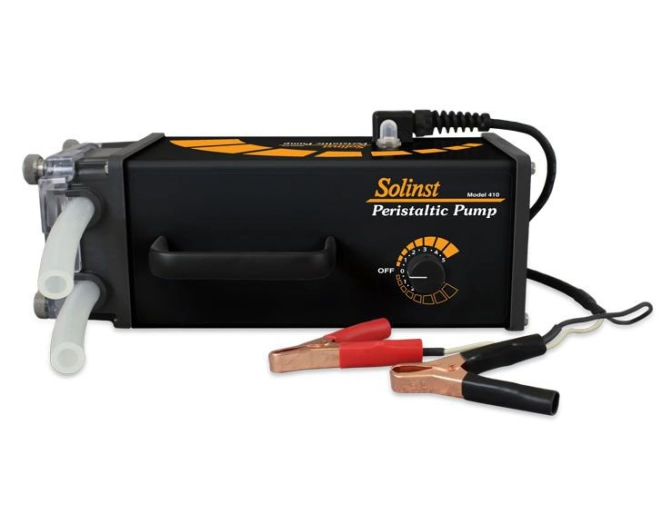
Ref. 2100000000059
Not available
Not available for this country
-
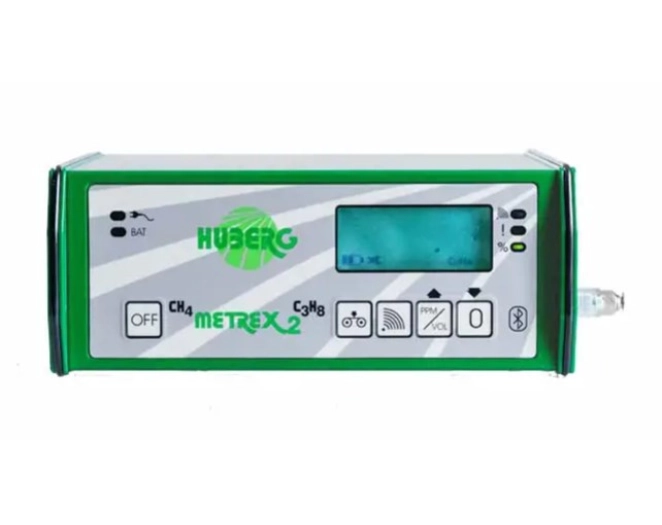
QED METREX 2 Portable CH4 Gas Leak Detector
Ref. 3100000000155
Not available
Not available for this country
-
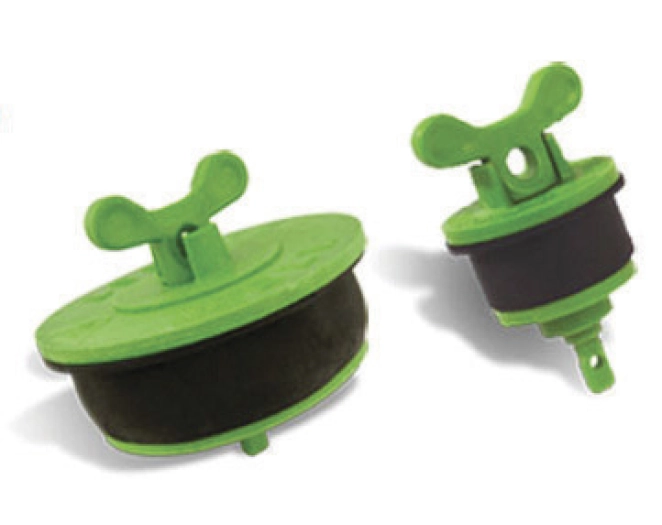
Expandable plug for gas sampling 4"
Ref. 3100000000071
-
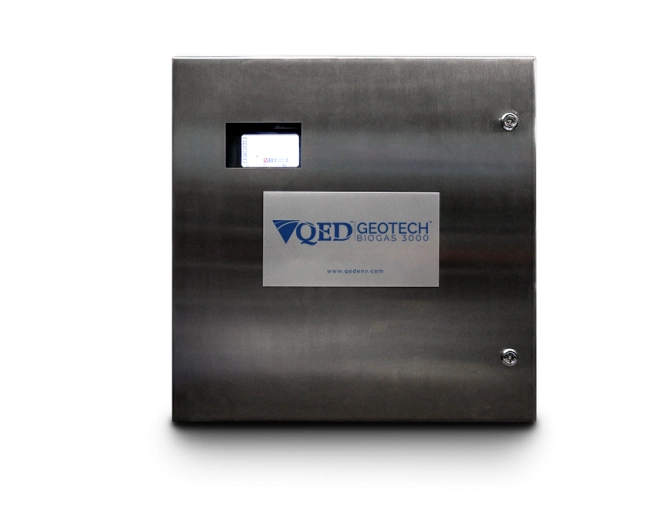
Biomethane 3000
Ref. 3100000000241
Not available
Not available for this country
-
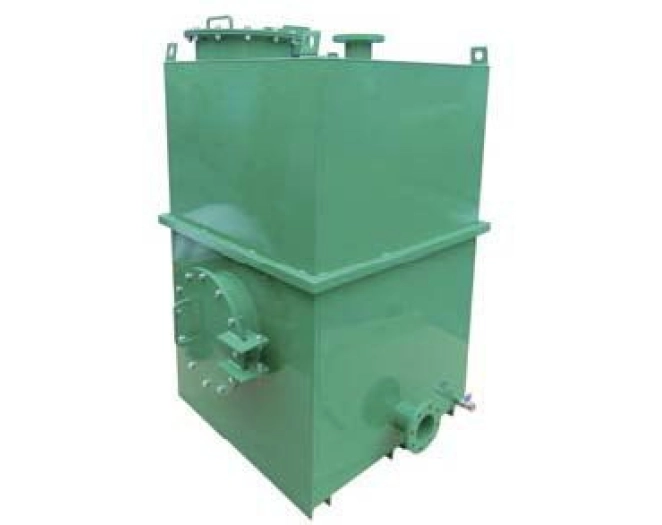
Active carbon air filter
Ref. 8200000000279