






Bioestimulation

Bioestimulation

Mechanism

Mechanism

Biological degradation process. Microorganisms use oxygen to break down pollutants.

Contaminants

Contaminants

Allows treatment of petroleum hydrocarbons and other compounds including oxygenated ethers (ETBE, MTBE).

Action time

Concentrations

Allows treatment of a wide range of contaminants.

Action time

Action time

Treatment periods of 6-18 months.

Conditions

Conditions

Saturated zone.

Application frequency

Application frequency

May require applications every 4-6 months.

Stimulated aerobic Bioremediation - (Biostimulation)

Biostimulation or stimulated aerobic biodegradation is the practice of eliminating the factors that limit the biodegradation of pollutants, usually introducing nutrients (nitrogen and phosphorus) and oxygen in the saturated zone and in the groundwater to increase the number and activity of autochthonous microorganisms capable of biodegradation. Envirotecnics has macro and micronutrient solutions to apply directly to soils and groundwater ENVIROactiv and ENVIROnutri. Oxygen is considered by many to be the main limiting factor for the growth of hydrocarbon-degrading bacteria. Natural sources of dissolved oxygen are rapidly depleted when petroleum hydrocarbons are released underground, so the natural attenuation of petroleum hydrocarbons in aquifers without treatment and with low oxygen concentrations is slow.

By supplying oxygen to the subsurface biological processes are stimulated and aerobic biodegradation rates can be accelerated 10 to 100 times compared to natural rates.

Compounds treated by biostimulation most frequently are petroleum hydrocarbon components (BTEX, HAP, TPH) and related oxygenated ethers (MTBE, ETBE, TBA).

The biodegradability studies in the laboratory allow determining in some cases the need to add macro and micronutrients. The biostimulation process is typically used to treat low to moderate levels of contamination. The compounds most commonly treated with aerobic bioremediation are petroleum hydrocarbon constituents.
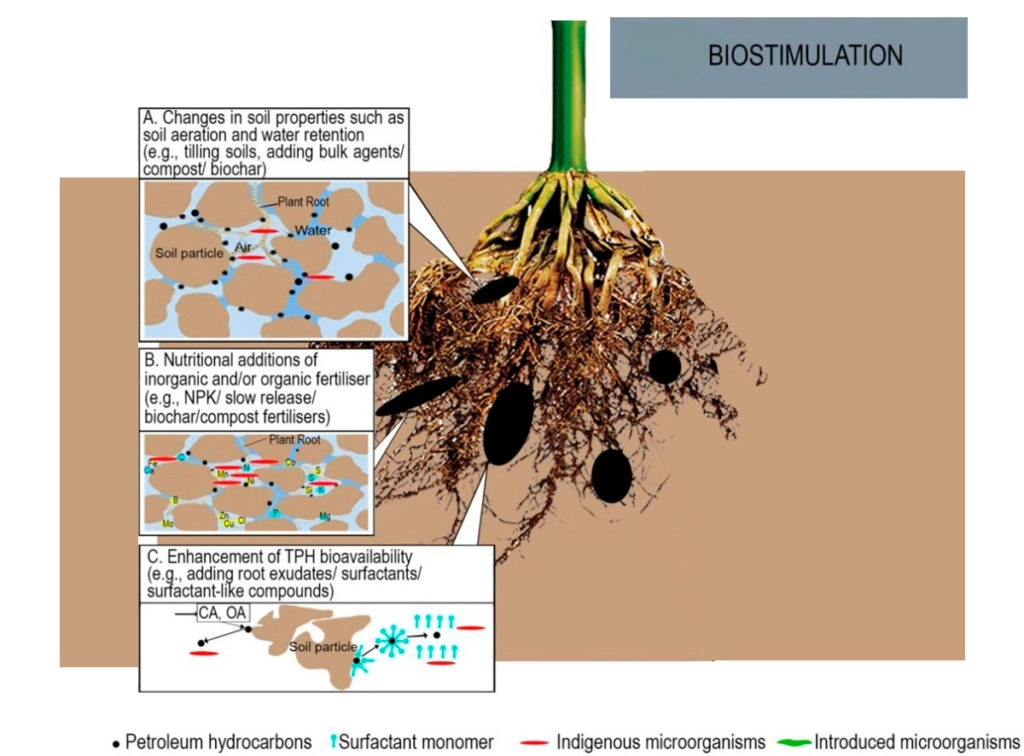

Bioestimulation

When it comes to high levels of petroleum hydrocarbons, many remediation professionals use stimulated aerobic biodegradation in conjunction with more powerful treatments such as in situ chemical oxidation (ISCO). Once levels of hydrocarbon contamination have been significantly reduced through ISCO, a transition can be made to aerobic biodegradation to treat lower level and more widely dispersed contaminants.

Associated services

  • Studies of microbiological and physicochemical characterization of samples of groundwater and contaminated soils.
  • Viability tests on samples of water and / or contaminated soils at the laboratory level.

Related products

Are you planning a BIOESTIMULATION project? 

Contact us to determine the best strategy.

This website uses its own technical cookies and third-party statistical cookies.

If you click Accept all, you agree to the installation of all of them. If you click Decline we will not use cookies for any additional purposes. If you click Configure you can decide on their installation or not. You can withdraw your consent or resume it at any time on the Cookies Policy page of this website.

For more information about cookies, access the Cookies Policy.