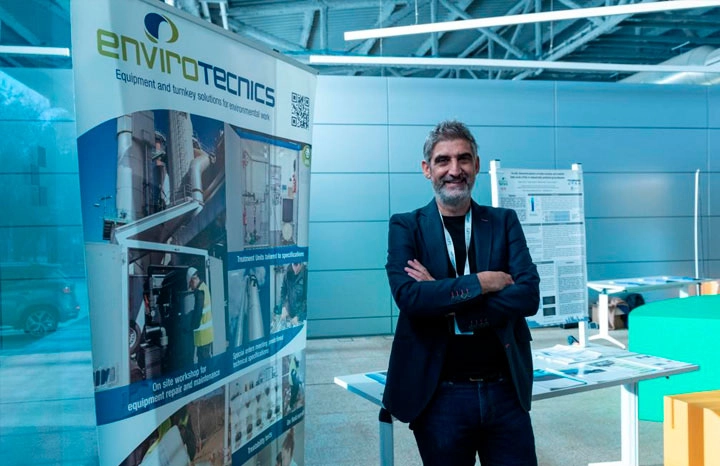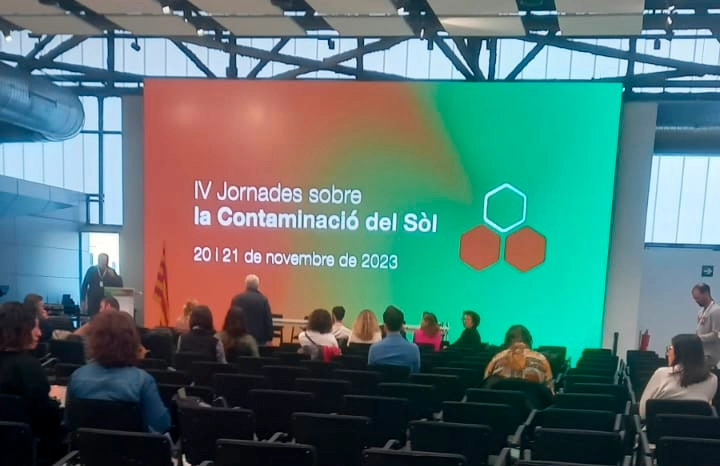
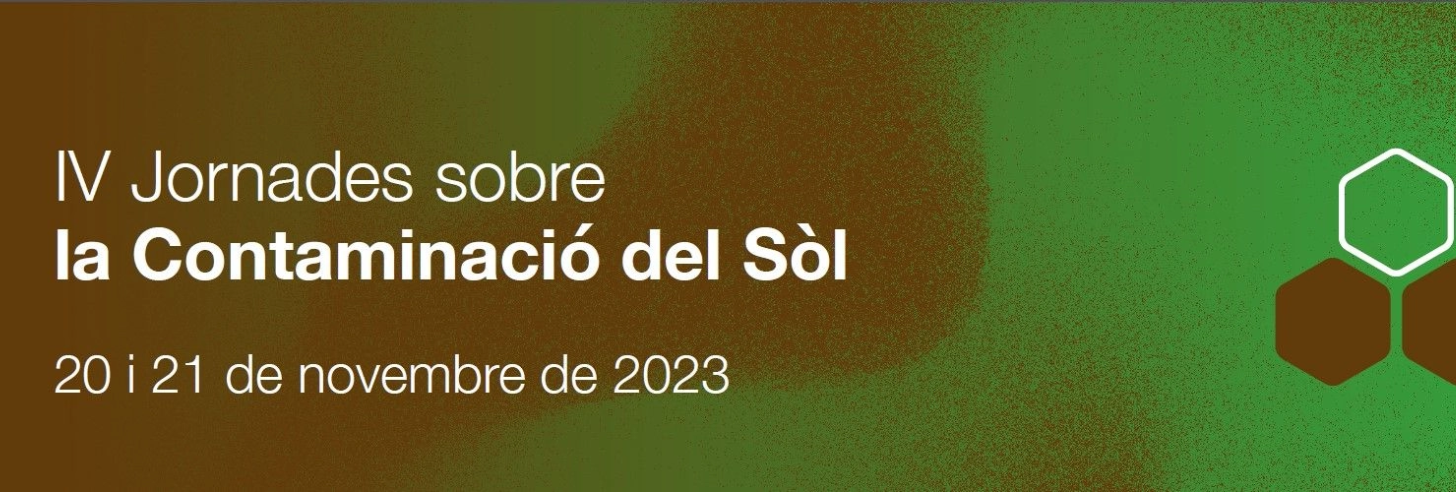
The Waste Agency of Catalonia held on October 20 and 21, 2023, the “IV Conference on Soil Contamination” in which ENVIROTECNICS has actively participated.
The conferences were held at the Espai Bital in l’Hospitalet del Llobregat and were attended, during the two days, by more than 200 people from different industrial sectors, engineering and consultancy firms, university research groups and administrations.
This new conference has given continuity to those previously held in 2015, 2017 and 2019 and has allowed to continue advancing among all the agents involved in the main lines of work that had been highlighted as a priority in previous meetings. The conferences have been structured in 4 thematic blocks:
Bioremediation
Treatment of organic compounds
PFAS
Land management
The following conclusions were reached from the presentations and round tables:
BLOCK 1. Bioremediation
Bioremediation, as a remediation technique, on its own or in conjunction with other techniques, can achieve desirable levels of decontamination.
Phytoremediation with appropriate species can decontaminate sites with surface hydrocarbon (and metal) contamination and generate biomass for biofuel production.
Biostimulation of soil microbial populations and bioecopiles with the application of redox gradients can achieve significant reductions of hydrocarbons and metals in the soil.
The cleanup time is usually long and is a limiting factor for its use.
Microbial electrochemistry as a remediation system applicable for various contaminants and matrices is in its initial phase of use. It may be a technique to be enhanced in the future.
Electrochemical techniques are also appropriate for the treatment of contaminated water with high concentrations of metals.
Bioremediation using fungi is a viable technique for classical remediation systems due to its low cost, low energy consumption and high efficiency in hydrocarbon degradation.
Ecotoxicity in bioremediation processes is a necessary evaluation factor to ensure viability.
BLOCK 2. Treatment of organic compounds
Treatment times of organic compounds (DNAPL) are often long and frequently experience rebound effects caused by contaminants stored in low permeability zones. More detailed studies are needed.
The combined use of physicochemical and microbiological methods may be adequate to treat these conditions.
The technique of isotope analysis makes it possible to monitor the evolution of oxidation reactions in degradation processes.
Universities and research centers are working on projects (at different stages of development) aimed at finding new decontamination systems with a low carbon footprint.
BLOCK 3. PFAS
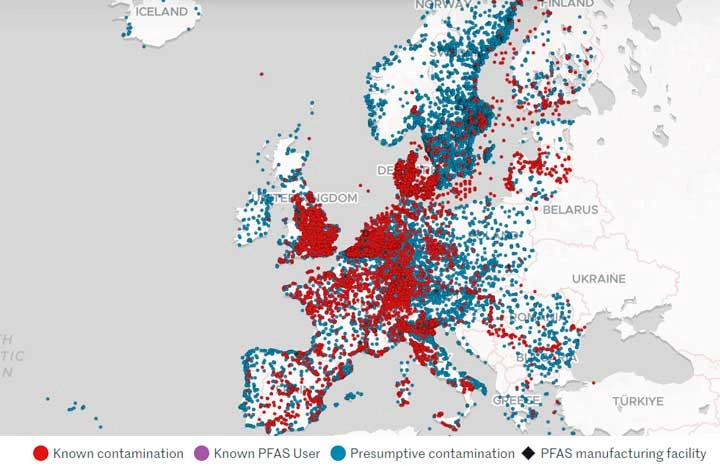
It is a family formed by a high number of synthesis compounds, making their knowledge difficult. They are practically ubiquitous, difficult to degrade and at low concentrations can have harmful effects on health and the ecosystem.
Their analysis is complex. Currently, about 50 (the most common) are analyzed in Europe. Non-specific parameters (precursors or total fluoride) are also determined.
Enhanced attenuation by adsorption is a sustainable system successfully applied in more than 40 sites.
In the future, new regulations and reference levels will determine the evolution of analytical techniques and treatment systems.
More information on remediation strategies
diego.corcho@envirotecnics.com
Tel: + 34 872 080 542
Other news
Contaminated Site Solutions Summit Madrid 2024
3 Sep 2024
Read post
International Day for Women's Rights
27 Feb 2025
Read post
EX-SITU REMEDIATION PILOT TESTING: OPTION OR NECESSITY?
This website uses its own technical cookies and third-party statistical cookies.
If you click Accept all, you agree to the installation of all of them.
If you click Decline we will not use cookies for any additional purposes.
If you click Configure you can decide on their installation or not.
You can withdraw your consent or resume it at any time on the Cookies Policy page of this website.
For more information about cookies, access the Cookies Policy.
Necessary technical cookies
The necessary technical cookies are our own cookies, and allow us to identify registered users and retrieve data from their previous activity; save time by avoiding the need to enter the same information again and protect their security by checking login data. If a user does not authorize the use of these cookies or deletes them, some services or functionalities of this website will not be available.
More information about the Cookies Policy
Statistical and third-party cookies (optionals)
Statistical and third-party cookies help us understand how visitors interact with our website in order to improve their user experience.
More information about the Cookies Policy