
Pompe à vessie 407
Pompe à vessie 407
Reference:
2100000000064
The bladder sampling pump enables excellent quality sampling in many applications.
It offers excellent reliability and results (E.P.A Certificate).
Not available for this country
Do you have any doubts? Contact us and we'll help you.
Ask for informationOffers excellent performance and reliability. Bladder pumps ensure that there is no contact with air or water during sampling.
Meets the most stringent U.S. EPA standards for monitoring volatile organic compounds (VOCs) in groundwater.
The bladder ensures that driving air or gas does not come into contact with the sample to avoid degassing or contamination. Bladder pumps are robust and durable.
PTFE bladders are ideal for dedicated applications, while more economical polyethylene bladders are available for those who prefer to change bladders after each use.
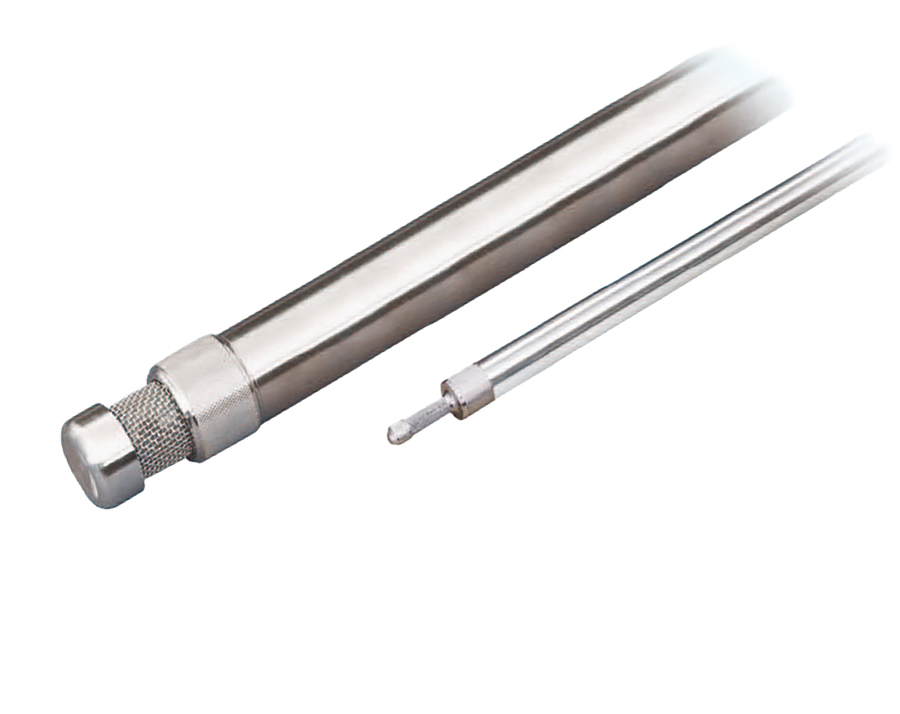
Bladders and intake filters are easily replaced in the field in just a few minutes. No special tools are needed.
Excellent for sampling at normal or low flow rates, stainless steel pumps can lift water from depths of up to 150 m below the surface.
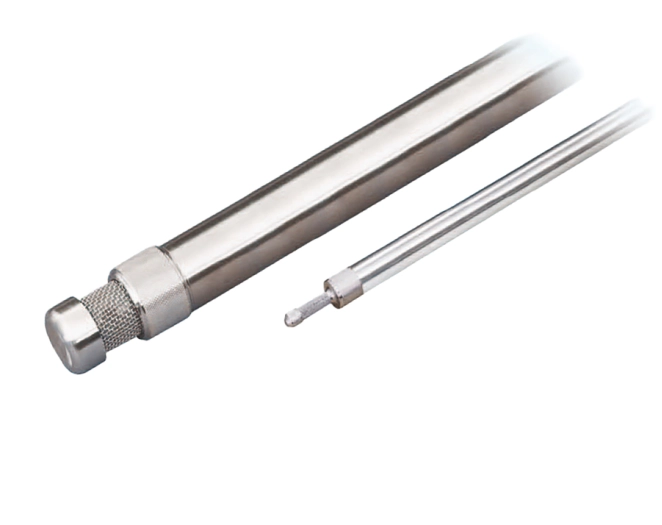
- Stainless steel: diameter of 1.66" (42 mm) and 1" (25 mm) with 316 stainless steel body.
- Non-vertical applications: Pumps operate effectively at almost any angle and can be placed under landfills, mine tailings, storage tanks, or contamination plumes.
- Leachate/product pumping: Pneumatic pumps are suitable for pumping contaminant liquids. Strong solvents and corrosive chemicals can be pumped easily and economically.
- Survives dry pumping, dirty air, and sand: Bladders are not damaged by operating in sediment-laden water or under dry pumping conditions.
- Anti-freeze protection equipment: Optional accessory available to prevent freezing in the sampling line.
The pumps operate effectively at almost any angle and can be placed:
- under landfills
- mine tailings
- storage tanks
- pollution plumes.
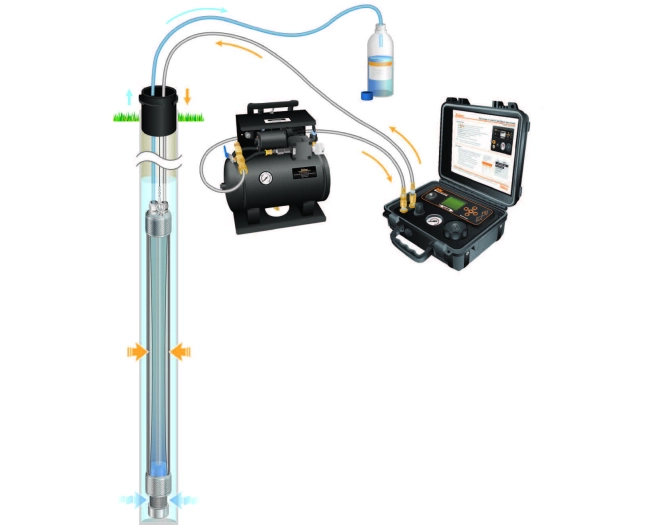
When a bladder pump is lowered into a well, hydrostatic pressure allows formation water to enter the central PTFE chamber (the bladder) through the intake filter and fill up to the static level.
When air or compressed gas is applied to the drive line, it pressurizes the space around the bladder, causing it to collapse and push the water up into the sample line.
Check valves ensure that the water does not flow back through the pump or into the formation.
When the air or compressed gas is vented (released), more formation water enters the bladder. When pressure is reapplied, fresh formation water is pushed to the surface.
The pressure/vent cycles are repeated, providing a constant upward flow of water to the sample line without stripping volatile compounds from the sample. Turbidity is minimized due to low flow rates and gentle pumping.
Thus, a high-quality groundwater VOC sample is obtained.
Low Flow Purging and Sampling
Low flow sampling offers high-quality samples by reducing turbulence. It also reduces purge volumes, thus reducing sampling time and disposal costs. By using a Model 464 electronic pump control unit, the bladder pump can be regulated to provide a continuous output of 100 ml/min or less.
The use of a continuous flow cell system during low flow sampling allows for the continuous analysis of purge water, inline, as it flows, so that sampling can begin as soon as readings stabilize.
Mechanical seals are also available to further reduce purge volumes and speed up sampling times.
Higher Flow Rates
When larger purge volumes are needed, bladder pumps can provide flow rates up to 1.5 l/min. Alternatively, the Stainless Steel Dual Valve Pump is an option.
These Dual Valve Pneumatic Pumps can operate at high flow rates and can also sample at greater depths than bladder pumps.
Flow rates vary with pump depth below surface, depth below water level, drive and sample line pipe sizes, drive and vent cycle times, applied gas pressure, and aquifer recharge.
The flow rates of the bladder pump and Solinst DVP compare favorably with published data for similar types and sizes of pumps under similar conditions.
Sizing Example:
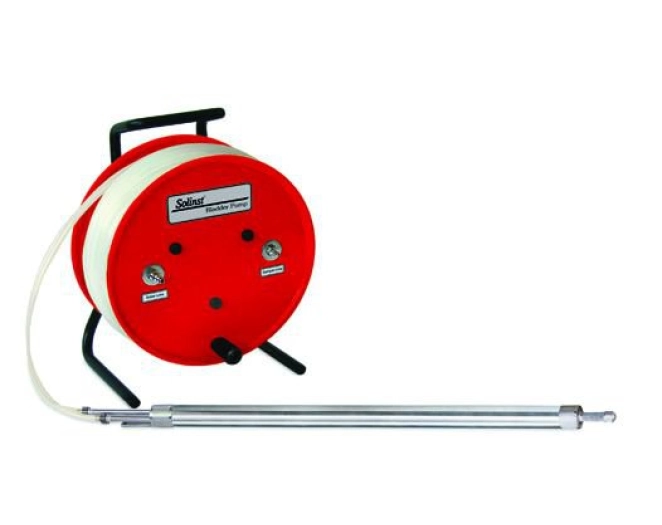
1.66" x 2 ft (42 mm x 610 mm) bladder pump at 100 psi, with a 1/4" OD drive line and a 3/8" OD sample line; 50 ft (15 m) below surface and 25 ft (7.5 m) below water level yields a flow rate of 1.5 l/min.
- High-quality samples: Consistent and accurate samples with excellent VOC sample integrity.
- Simplicity: One person can transport the controller, air compressor, and continuous flow cell to any site. Attach to the pump using pressure couplings.
- Cost savings: Reduced need to repeat sampling and less time required for each sampling round. Low purge volumes ensure quick sampling.
- Bladders: PTFE bladders (PFAS-free) are ideal for dedicating the pump.
- Economical polyethylene bladders are also available.
-
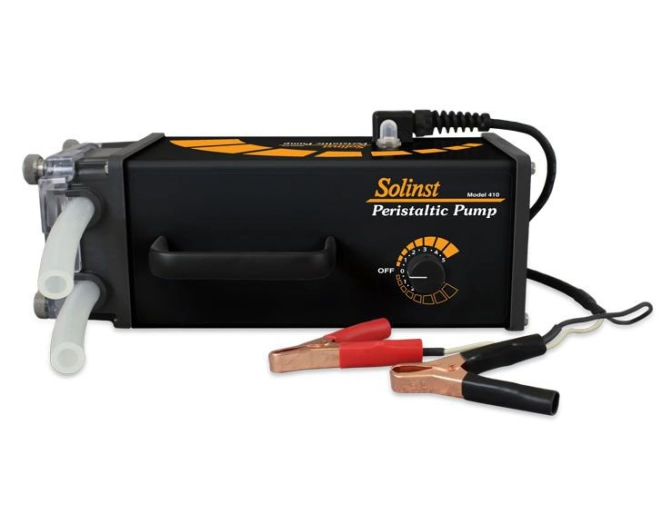
Ref. 2100000000059
Not available
Not available for this country
-
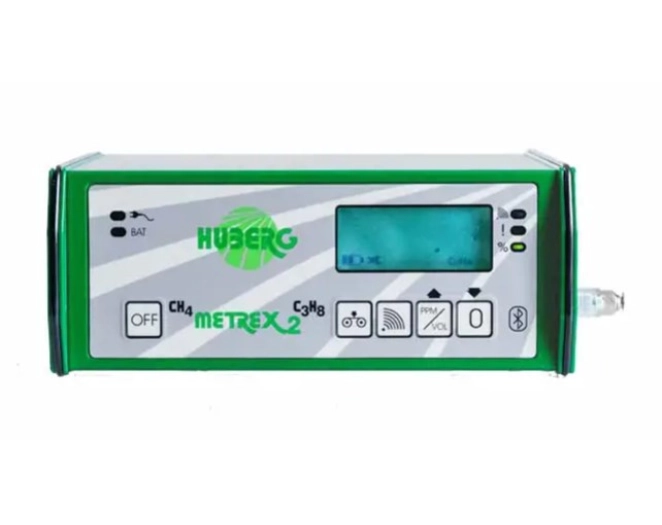
QED METREX 2 Portable CH4 Gas Leak Detector
Ref. 3100000000155
Not available
Not available for this country
-
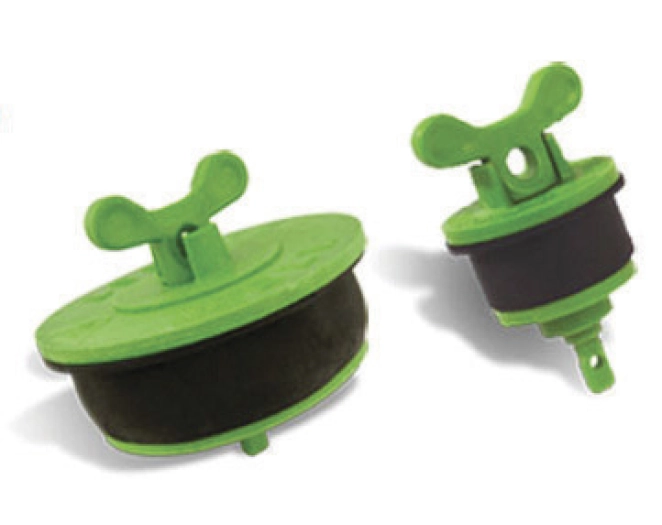
Expandable plug for gas sampling 4"
Ref. 3100000000071
-
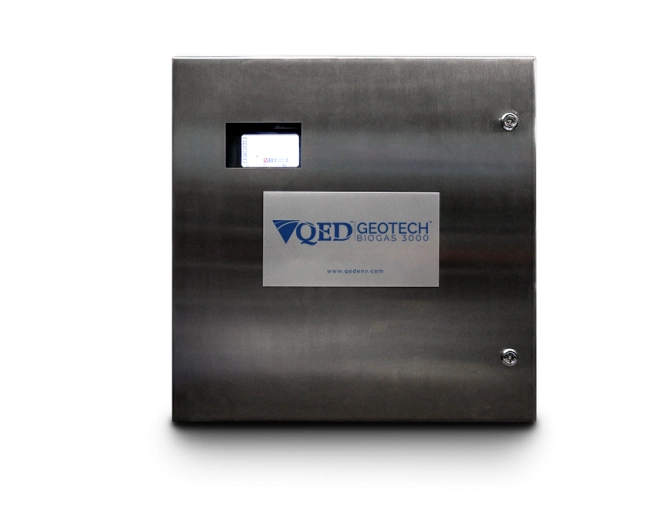
Biomethane 3000
Ref. 3100000000241
Not available
Not available for this country
-
Active carbon air filter
Ref. 8200000000279