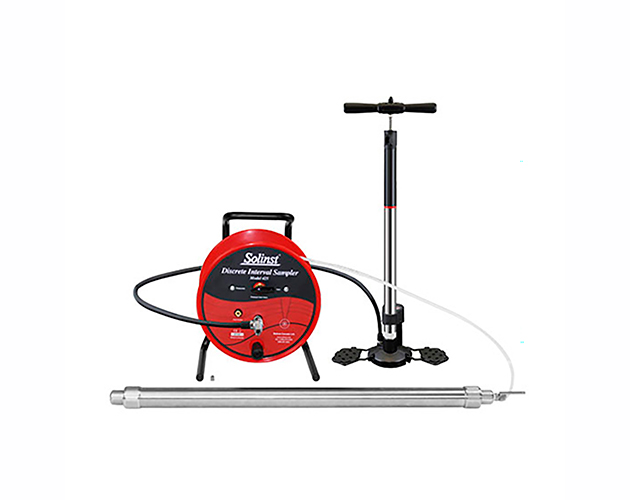
Model 425 discrete interval sampler

Model 425 discrete interval sampler

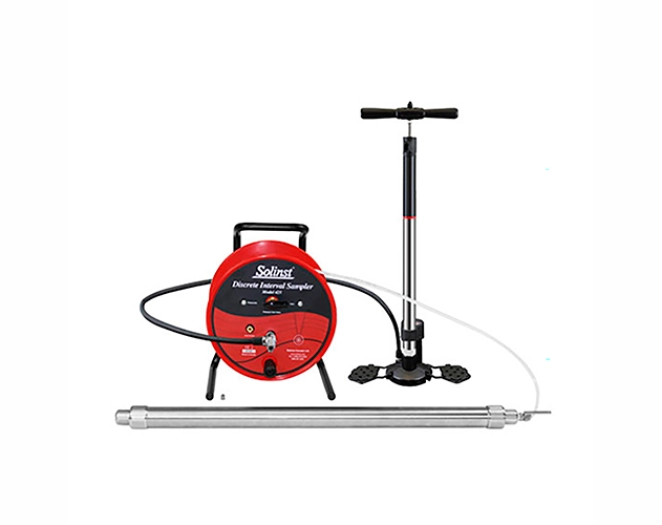
Model 425 discrete interval sampler

The model 425 is a discrete interval sampler that allows for groundwater sampling below hydrocarbon layers (floating or dense) at desired depths without cross-contamination from upper layers.

Available for rent

New model 425D for great depths up to 1,000m

Do you have any doubts? Contact us and we'll help you.

Ask for information
Description
Features
Applications
Performance
Advantages
Documents

The Solinst Model 425 Discrete Interval Sampler is a portable instrument designed for the accurate collection of groundwater samples at various depths, ideal for wells, piezometers, and geotechnical borings. Its compact and durable design allows for discrete sampling without cross-contamination, ensuring the integrity of the sample for environmental and water quality analysis.

The model 425 allows for the collection of multiple samples at specific intervals in a single operation, optimizing fieldwork time and minimizing sample handling. This sampler is widely used by environmental consultants, laboratories, and regulatory agencies that require representative and reliable samples for hydrogeology and environmental monitoring studies.

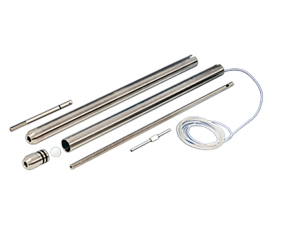
Ideal for chemical profiling in wells. The sampler is made of stainless steel and can be supplied with the tubing mounted on a reel. It comes with a device to release the sample. It is easy to clean.

Discrete Sampling without Purge

Discrete sampling is ideal for collecting representative samples of groundwater and Plume samples (light non-aqueous phase liquids LNAPL) and Heavy plumes (dense non-aqueous phase liquids DNAPL). The Discrete Sampler is ideal for sampling groundwater located beneath oil/hydrocarbon layers and allows taking the sample from water that hasn't been contacted by the oil.

It is also used for profiling bodies of water, open boreholes, and wells with slotted zones, and for collecting samples at different levels and water entry points. The possibility of mixing waters from different levels within the same well is minimized.

The model 425 is also recognized as a no-purge sampler. The passive sampling method, also known as the zero purges method, has gained significant worldwide acceptance by regulatory agencies, making it an instrument for obtaining high-quality groundwater samples.

These sampling methods are based on the principle that the water flowing in the well maintains equilibrium with the adjacent aquifer water. Sampling at discrete intervals results in representative samples, without the need to purge.

For sampling at great depths

Solinst also offers the 425D discrete interval sampler for deep-water sampling up to 1,000m of water column.
  • Collection of representative groundwater samples beneath hydrocarbon layers
  • Discrete interval sampling in lakes, rivers, and wells
  • Profiling for chemical analysis of water in wells
  • Sampling at water entry points into the well
  • Sampling of LNAPL and DNAPL layers

Advantages:

  • High-quality samples.
  • The sample has not been pumped through a hose.
  • No mixing of water from different levels.
  • Minimal alteration of the water.
  • Easy to assemble and disassemble for decontamination.
  • Avoids the need to purge and dispose of water.
  • Reduced time and cost to collect samples.
  • Easy to operate and transport.

Model 425 operates through a controlled lifting and release system of the sampling bottle:

Sampler preparation

  • Attach the sampling bottle to the sampler and secure the release system.
  • Set the depth for each sampling interval.

Descent into the well

  • Lower the sampler into the well or piezometer using the graduated cable.
  • The equipment remains closed until reaching the desired depth.

Sample collection at specific depth

  • At the predetermined interval, the bottle automatically opens to collect the sample.
  • It closes upon ascent, ensuring the sample is not contaminated.

Repetition at multiple intervals

  • Multiple samples can be collected at different depths without removing the equipment from the well.
  • Each sample remains isolated to maintain its integrity and representativeness.

Recovery and analysis

  • Remove the sampler from the well.
  • Take out the bottles and transport them for laboratory analysis or onsite monitoring.

This operation enables obtaining discrete and representative samples quickly and efficiently, optimizing groundwater sampling campaigns.

  • High quality samples.
  • The sample has not been pumped through a hose.
  • No mixing of water at different levels.
  • Minimal water disturbance.
  • Easy to assemble and disassemble for decontamination.
  • Avoids the need to purge water and dispose of it.
  • Less time and cost to collect samples.
  • Easy to operate and transport.

Models

This website uses its own technical cookies and third-party statistical cookies.

If you click Accept all, you agree to the installation of all of them. If you click Decline we will not use cookies for any additional purposes. If you click Configure you can decide on their installation or not. You can withdraw your consent or resume it at any time on the Cookies Policy page of this website.

For more information about cookies, access the Cookies Policy.