
Published 05/29/2026
Published 05/29/2026
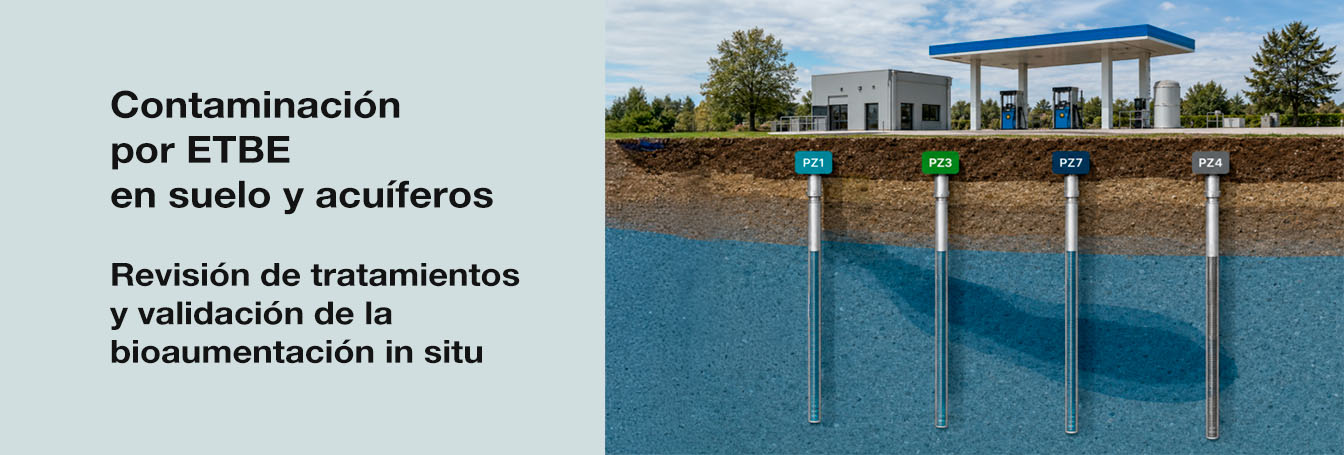
Groundwater contamination by ethyl tert-butyl ether (ETBE) remains one of the major challenges in the remediation of hydrocarbon-impacted sites.
The high mobility of ETBE in aquifers, combined with its limited natural biodegradability, promotes the formation of persistent contaminant plumes that are difficult to treat using conventional biostimulation or natural attenuation strategies.
To evaluate more effective biotechnological alternatives, Envirotecnics conducted an in situ bioaugmentation pilot test at a site affected by historical hydrocarbon and oxygenated additive contamination, with initial ETBE concentrations exceeding 11,000 µg/L.
ETBE (ethyl tert-butyl ether) is an oxygenated fuel additive used to improve combustion efficiency and reduce certain atmospheric emissions.
However, its physicochemical properties make it one of the most challenging contaminants in groundwater remediation due to its high water solubility, low adsorption to geological media, high aquifer mobility, and limited natural biodegradability.
These characteristics facilitate the spread of persistent plumes and complicate remediation through conventional treatment processes.
The pilot study was conducted over a 161-day period using different biological treatment strategies under real contaminated aquifer conditions:
Strategy 01
Sequential bioaugmentation using the specialized ETBE-ENV bacterial consortium
Strategy 02
Bioaugmentation with immobilized biomass
Strategy 03
Conventional biostimulation
Strategy 04
Natural attenuation control
Treatment Components
The bioaugmentation strategy was based on the application of the ETBE-ENV bacterial consortium, specifically developed to promote the degradation of ETBE and tert-butanol (TBA), the main intermediate metabolite generated during the process.
Nutrients
Inorganic nutrients EnviroNutri
Oxygenation
Oxygen-releasing systems Enviroxi-ORC
Technical Control
Advanced hydrogeochemical monitoring to validate treatment performance and evolution.
Combined strategies may also include technical surfactants such as EnviroSurf and EnviroKreosote designed to improve contaminant bioavailability in soils and aquifers.
Monitoring activities included physicochemical, microbiological, and advanced molecular analyses using qPCR, RNA/cDNA, NGS sequencing, and functional gene analysis associated with hydrocarbon and ETBE degradation.
Among the monitored biomarkers, ethB — associated with ETBE degradation — and alkB — related to aliphatic hydrocarbon oxidation — showed particularly significant results.
The results obtained demonstrated significant differences among the evaluated remediation strategies. Bioaugmented systems achieved the highest degradation rates.
113–117
µg ETBE/L/day through bioaugmentation
12–14
µg ETBE/L/day through biostimulation
In bioaugmented monitoring wells, ETBE concentrations decreased by nearly 70% during the initial treatment phases, eventually reaching residual concentrations close to non-detectable levels during advanced stages of the study.

Temporal evolution of ETBE concentration

The immobilized biomass strategy also showed more stable and sustained performance, reducing hydraulic washout phenomena and promoting biomass persistence within the aquifer.
Microbiological and molecular analyses confirmed that the observed contaminant reduction was directly associated with biologically induced activity resulting from the treatment.
qPCR quantification showed a significant increase in functional genes related to ETBE and hydrocarbon degradation, particularly ethB and alkB.
RNA/cDNA analyses also confirmed that degrading populations remained metabolically active during the advanced phases of the treatment.
The results additionally demonstrated a significant increase in specific degradation potential in bioaugmented systems compared to conventional treatments.
NGS sequencing analysis revealed a significant reorganization of aquifer bacterial communities following bioaugmentation application.
Bioaugmented systems showed greater microbial diversity, an increase in specialized degrading populations, enhanced functional stability, and a clearly differentiated ecological response compared to biostimulated systems.
Among the inoculated strains, Pseudomonas phenolilytica showed particularly strong persistence, reaching high levels of adaptation and survival under real field conditions.
The results also suggest the existence of functional interactions between the introduced inoculum and native aquifer populations, promoting cooperative sequential degradation processes.

The pilot test results suggest that bioaugmentation significantly accelerated the initial stages of ETBE degradation through the introduction of specialized and metabolically active bacterial populations.
The combination of specific bacterial consortia, controlled oxygen delivery (ENVIROxi-ORC), nutrients (ENVIRONUTRI) and advanced molecular monitoring enhanced the functional stability of the system and maintained sustained biodegradation activity throughout the study.
Immobilized biomass also demonstrated relevant operational advantages, particularly regarding microbiological stability and persistence within the aquifer.
The results validate the technical feasibility of aerobic bioaugmentation as an effective strategy for the remediation of aquifers impacted by persistent ETBE contamination.
The combination of bioaugmentation, removal of limiting factors, advanced molecular monitoring, and integrated microbiological assessment significantly accelerated degradation processes and improved the functional stability of the treated system.
Dr. Diego Corcho
Head of In Situ Remediation Division / HSEQ
PhD in Environmental Engineering
Our technical team can help you evaluate the most suitable remediation strategy according to the contaminant, hydrogeological conditions, and project objectives.
Ref. 2100000000059
Not available
Not available for this country
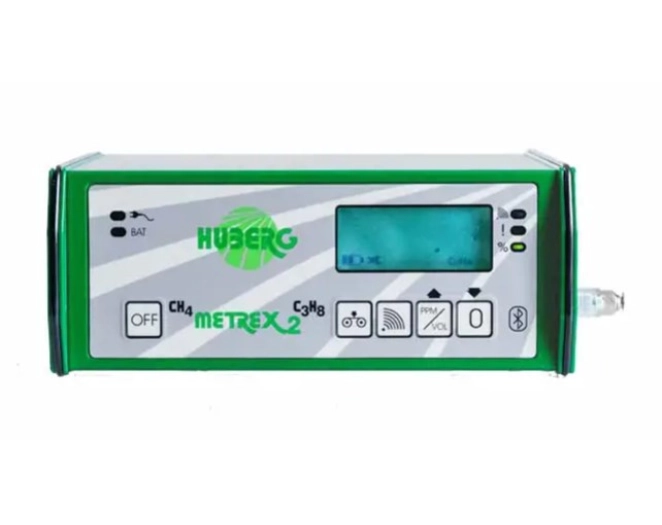
QED METREX 2 Portable CH4 Gas Leak Detector
Ref. 3100000000155
Not available
Not available for this country
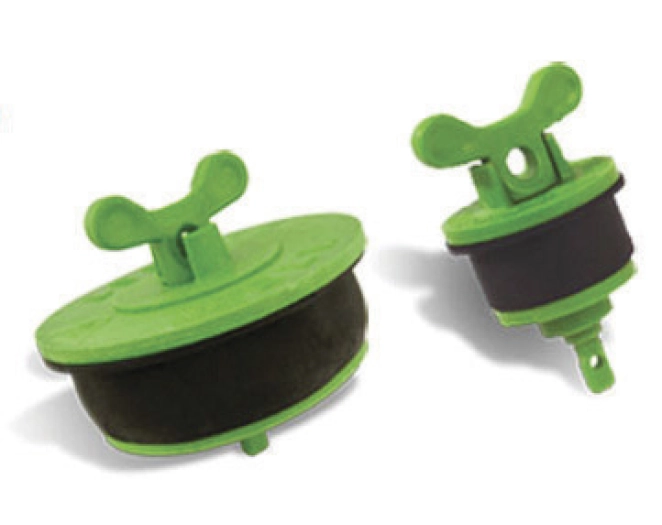
Expandable plug for gas sampling 4"
Ref. 3100000000071
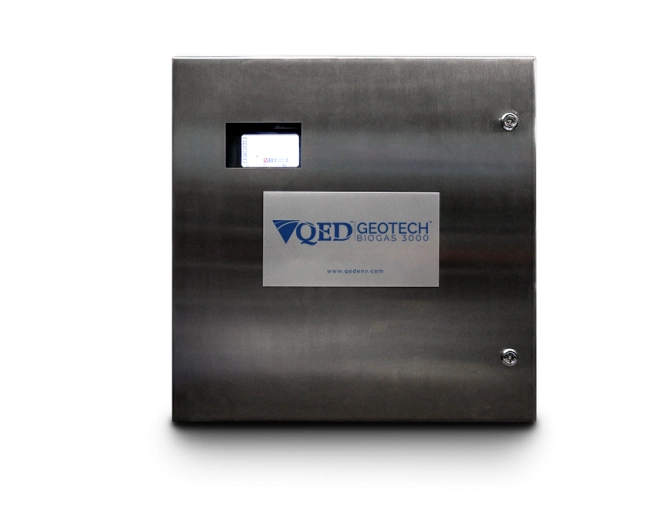
Biomethane 3000
Ref. 3100000000241
Not available
Not available for this country
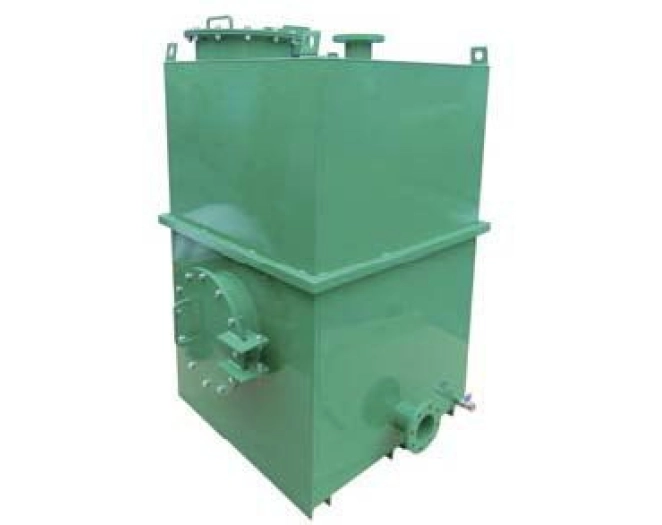
Active carbon air filter
Ref. 8200000000279